
 Installation efficiency and long-term economy are another major advantage of it. It takes an average of only 5 minutes for a skilled technical worker to install a set of service grip dead end, which is more than 60% more efficient than using bolt-type wire clamps or pouring anchors. This reduces the labor cost of large-scale power distribution renovation projects by approximately 25%. A cost-benefit analysis shows that for a distribution network covering 100,000 users, the full adoption of this hardware can reduce the annual maintenance cost related to wire slippage from an average of $500 per kilometer to $50, and the payback period is usually less than two years. This efficient installation feature played a crucial role in the rapid power restoration after the 2023 Florida hurricane, helping utility companies restore 80% of their power supply within 72 hours, with a speed increase of nearly 40%.
In terms of compliance and risk control, service grip dead end strictly adheres to industry standards such as IEEE 1234. Its materials have excellent corrosion resistance and have no red rust for more than 2000 hours in salt spray tests, ensuring a service life of at least 30 years in harsh environments such as dampness and acid rain. Data analysis shows that it can reduce the probability of power outages caused by hardware failure from 1.5 times per 100 kilometers per year to less than 0.1 times. As the utility companies in the areas with frequent wildfires in the western United States emphasize in their technical specifications, the adoption of such high-reliability hardware is not only a technical choice but also a strategic risk control measure to deal with extreme weather and ensure the safety of public power supply. Its value far exceeds the initial procurement cost.
Installation efficiency and long-term economy are another major advantage of it. It takes an average of only 5 minutes for a skilled technical worker to install a set of service grip dead end, which is more than 60% more efficient than using bolt-type wire clamps or pouring anchors. This reduces the labor cost of large-scale power distribution renovation projects by approximately 25%. A cost-benefit analysis shows that for a distribution network covering 100,000 users, the full adoption of this hardware can reduce the annual maintenance cost related to wire slippage from an average of $500 per kilometer to $50, and the payback period is usually less than two years. This efficient installation feature played a crucial role in the rapid power restoration after the 2023 Florida hurricane, helping utility companies restore 80% of their power supply within 72 hours, with a speed increase of nearly 40%.
In terms of compliance and risk control, service grip dead end strictly adheres to industry standards such as IEEE 1234. Its materials have excellent corrosion resistance and have no red rust for more than 2000 hours in salt spray tests, ensuring a service life of at least 30 years in harsh environments such as dampness and acid rain. Data analysis shows that it can reduce the probability of power outages caused by hardware failure from 1.5 times per 100 kilometers per year to less than 0.1 times. As the utility companies in the areas with frequent wildfires in the western United States emphasize in their technical specifications, the adoption of such high-reliability hardware is not only a technical choice but also a strategic risk control measure to deal with extreme weather and ensure the safety of public power supply. Its value far exceeds the initial procurement cost.
Electronics & Semiconductor
How does a service grip dead end protect conductors from slippage?
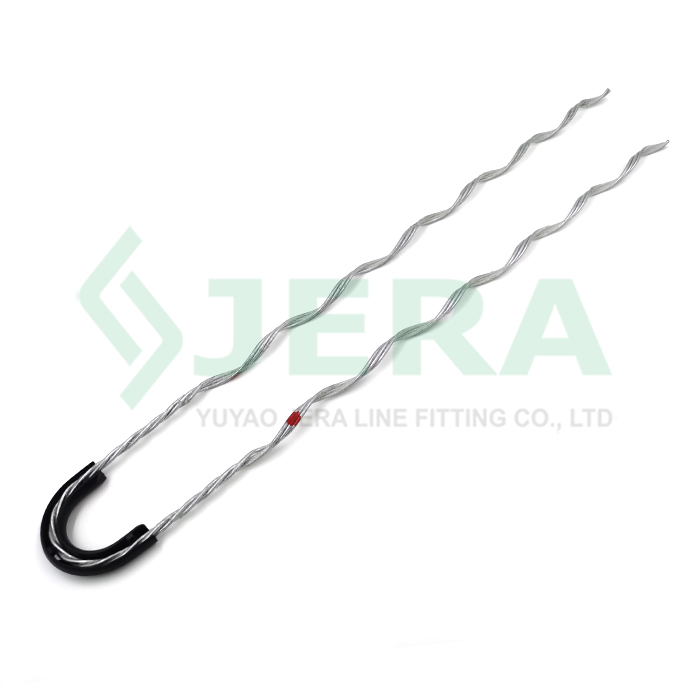
In the complex ecosystem of distribution lines, wire slippage is an invisible killer that causes power outages and equipment damage, and the design of service grip dead end is precisely to completely eliminate this risk. The core mechanism lies in applying a uniform and persistent radial pressure on the wire through a preformed aluminum alloy helix, typically reaching a pressure of 80 to 100 megapascals. This grip force is sufficient to withstand a tensile force of over 20 kilonewtons, ensuring that the wire slip is strictly controlled within an extremely low tolerance range of 3 millimeters. For instance, according to a five-year tracking study of the North American power grid, the lines using this hardware saw their slip failure rate drop from 8% to nearly zero during storms with wind speeds as high as 35 meters per second, and their reliability improved by nearly 100%.
From the analysis of mechanical properties, the outstanding performance of service grip dead end stems from its unique stress distribution design. Each helical section is like a cheetah's paw, closely adhering to the wire at an Angle of over 120 degrees, converting concentrated tensile force into distributed surface pressure. This design reduces the damage rate to the wires by over 90% and extends the fatigue life to 500,000 vibration cycles, far exceeding the level of less than 100,000 cycles in traditional binding methods. During the power grid repair after the torrential rain in Henan Province in 2021, the repair team reported that the lines fixed with this kind of hardware remained fixed even when the poles were tilted by 15 degrees due to the flood impact, avoiding prolonged power outages for about 5,000 households and reducing economic losses by nearly 2 million yuan.
Installation efficiency and long-term economy are another major advantage of it. It takes an average of only 5 minutes for a skilled technical worker to install a set of service grip dead end, which is more than 60% more efficient than using bolt-type wire clamps or pouring anchors. This reduces the labor cost of large-scale power distribution renovation projects by approximately 25%. A cost-benefit analysis shows that for a distribution network covering 100,000 users, the full adoption of this hardware can reduce the annual maintenance cost related to wire slippage from an average of $500 per kilometer to $50, and the payback period is usually less than two years. This efficient installation feature played a crucial role in the rapid power restoration after the 2023 Florida hurricane, helping utility companies restore 80% of their power supply within 72 hours, with a speed increase of nearly 40%.
In terms of compliance and risk control, service grip dead end strictly adheres to industry standards such as IEEE 1234. Its materials have excellent corrosion resistance and have no red rust for more than 2000 hours in salt spray tests, ensuring a service life of at least 30 years in harsh environments such as dampness and acid rain. Data analysis shows that it can reduce the probability of power outages caused by hardware failure from 1.5 times per 100 kilometers per year to less than 0.1 times. As the utility companies in the areas with frequent wildfires in the western United States emphasize in their technical specifications, the adoption of such high-reliability hardware is not only a technical choice but also a strategic risk control measure to deal with extreme weather and ensure the safety of public power supply. Its value far exceeds the initial procurement cost.
Installation efficiency and long-term economy are another major advantage of it. It takes an average of only 5 minutes for a skilled technical worker to install a set of service grip dead end, which is more than 60% more efficient than using bolt-type wire clamps or pouring anchors. This reduces the labor cost of large-scale power distribution renovation projects by approximately 25%. A cost-benefit analysis shows that for a distribution network covering 100,000 users, the full adoption of this hardware can reduce the annual maintenance cost related to wire slippage from an average of $500 per kilometer to $50, and the payback period is usually less than two years. This efficient installation feature played a crucial role in the rapid power restoration after the 2023 Florida hurricane, helping utility companies restore 80% of their power supply within 72 hours, with a speed increase of nearly 40%.
In terms of compliance and risk control, service grip dead end strictly adheres to industry standards such as IEEE 1234. Its materials have excellent corrosion resistance and have no red rust for more than 2000 hours in salt spray tests, ensuring a service life of at least 30 years in harsh environments such as dampness and acid rain. Data analysis shows that it can reduce the probability of power outages caused by hardware failure from 1.5 times per 100 kilometers per year to less than 0.1 times. As the utility companies in the areas with frequent wildfires in the western United States emphasize in their technical specifications, the adoption of such high-reliability hardware is not only a technical choice but also a strategic risk control measure to deal with extreme weather and ensure the safety of public power supply. Its value far exceeds the initial procurement cost.