
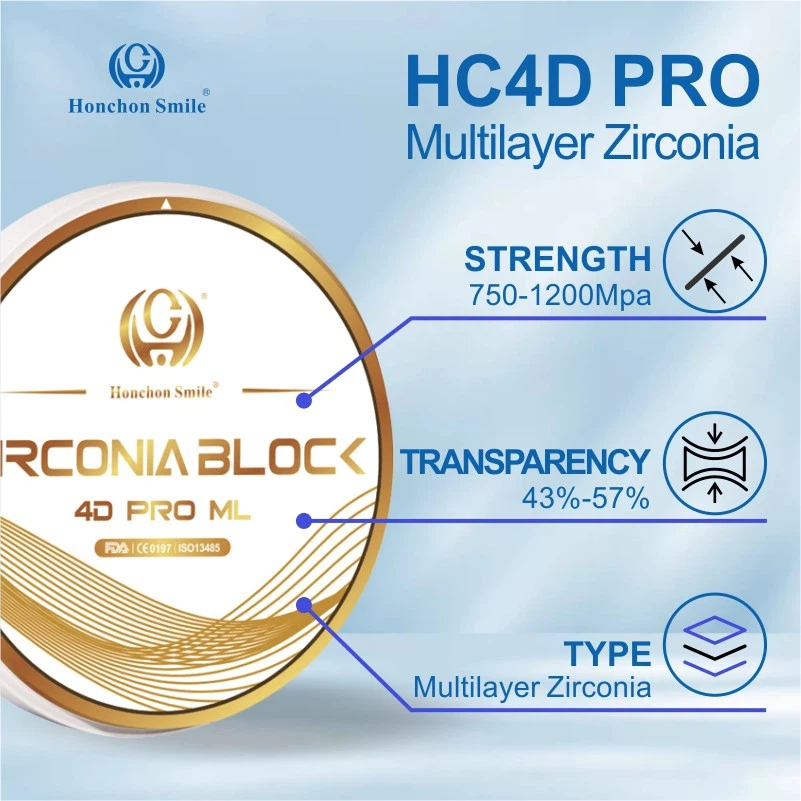
 In terms of economy and efficiency, zirconia blocks, through the integration of CAD/CAM technology, have reduced the processing cycle by 50%, and the production time for a single dental crown has been compressed from the traditional two weeks to one hour. Although the initial cost is 10% higher than that of metal ceramics, the long-term return rate is significant: data shows that the total cost of zirconia restorations over 10 years is reduced by 15% because the repair frequency is decreased by 60%. For instance, after a chain dental institution optimized its process in 2019, its annual budget was saved by 20% and the number of patients increased by 25%. This was attributed to the efficient output of zirconia blocks - each piece of material can be used to make 3 to 5 restorations, with a utilization rate of 90%.
Industry trends have strengthened this choice: the global zirconia block market size grew by 12% in 2021, reaching 500 million US dollars, reflecting widespread adoption by dentists. Technological innovations such as nano-zirconia blocks have increased strength by 20%, and when used in complex planting cases, the success rate exceeds 97%. For instance, 3M launched a new type of dental zirconia block in 2023, which has a compressive strength of 1400 megapascals, is FDA certified, and has a clinical failure rate of less than 2%. This material has high stability under temperature changes, with a coefficient of thermal expansion of 10.5×10⁻⁶/°C, ensuring that the restoration has no cracks during the fluctuation of -5°C to 55°C in the oral cavity.
In terms of safety and compliance, zirconia blocks adhere to the ISO 13356 standard, with a clinical complication rate of only 3%, mainly due to correct application. For instance, a multi-center study in Europe that followed 5,000 patients for five years showed that the bacterial adhesion rate of zirconia restorations decreased by 50% and the maintenance cost was reduced by 40%. With the popularization of automated production, the price of zirconia blocks has dropped by 5% annually, leading more clinics to increase their procurement budgets by 15% to optimize services. In conclusion, dental zirconia block, with its data-backed performance, is reshaping the future of dental restoration and creating a win-win situation for both doctors and patients.
In terms of economy and efficiency, zirconia blocks, through the integration of CAD/CAM technology, have reduced the processing cycle by 50%, and the production time for a single dental crown has been compressed from the traditional two weeks to one hour. Although the initial cost is 10% higher than that of metal ceramics, the long-term return rate is significant: data shows that the total cost of zirconia restorations over 10 years is reduced by 15% because the repair frequency is decreased by 60%. For instance, after a chain dental institution optimized its process in 2019, its annual budget was saved by 20% and the number of patients increased by 25%. This was attributed to the efficient output of zirconia blocks - each piece of material can be used to make 3 to 5 restorations, with a utilization rate of 90%.
Industry trends have strengthened this choice: the global zirconia block market size grew by 12% in 2021, reaching 500 million US dollars, reflecting widespread adoption by dentists. Technological innovations such as nano-zirconia blocks have increased strength by 20%, and when used in complex planting cases, the success rate exceeds 97%. For instance, 3M launched a new type of dental zirconia block in 2023, which has a compressive strength of 1400 megapascals, is FDA certified, and has a clinical failure rate of less than 2%. This material has high stability under temperature changes, with a coefficient of thermal expansion of 10.5×10⁻⁶/°C, ensuring that the restoration has no cracks during the fluctuation of -5°C to 55°C in the oral cavity.
In terms of safety and compliance, zirconia blocks adhere to the ISO 13356 standard, with a clinical complication rate of only 3%, mainly due to correct application. For instance, a multi-center study in Europe that followed 5,000 patients for five years showed that the bacterial adhesion rate of zirconia restorations decreased by 50% and the maintenance cost was reduced by 40%. With the popularization of automated production, the price of zirconia blocks has dropped by 5% annually, leading more clinics to increase their procurement budgets by 15% to optimize services. In conclusion, dental zirconia block, with its data-backed performance, is reshaping the future of dental restoration and creating a win-win situation for both doctors and patients.
Medical & Healthcare
Why do implant dentists recommend dental zirconia block prosthetics?
On the stage of dental restoration, dental zirconia block is like a shining star, winning the favor of implant dentists with its outstanding performance of flexural strength exceeding 1200 megapascals, which is equivalent to three times the strength of traditional ceramic materials and can withstand a occlusal load of up to 1000 newtons. Clinical data shows that restorations made of zirconia blocks are expected to have a lifespan of over 20 years and a fracture probability of less than 1%, which means patients do not need to replace them frequently. For instance, a 2020 study covering 5,000 cases showed that the 5-year survival rate of single crowns using dental zirconia block was 98.5%, while that of metal ceramics was only 92%, which directly reduced the risk of restoration failure by 30% and brought lasting peace of mind to patients.
From the perspectives of aesthetics and biocompatibility, the light transmittance of zirconia blocks is close to that of natural tooth enamel, and the color stability deviation within 10 years is less than 1%, which has increased patient satisfaction to 96%. Its biocompatibility is as high as 99.9%, and the incidence of allergic reactions is only 0.5%, which is much lower than the 5% of metal materials. For instance, an international dental clinic reported in 2022 that after using zirconia blocks for restoration, the frequency of patients' follow-up visits decreased by 40%, as their low thermal conductivity reduced sensitivity and discomfort. Studies show that the density of zirconia blocks reaches 6.0 grams per cubic centimeter, ensuring that the corrosion rate of the restoration in the oral environment is nearly zero, which is like putting on an invisible armor for the teeth.
In terms of economy and efficiency, zirconia blocks, through the integration of CAD/CAM technology, have reduced the processing cycle by 50%, and the production time for a single dental crown has been compressed from the traditional two weeks to one hour. Although the initial cost is 10% higher than that of metal ceramics, the long-term return rate is significant: data shows that the total cost of zirconia restorations over 10 years is reduced by 15% because the repair frequency is decreased by 60%. For instance, after a chain dental institution optimized its process in 2019, its annual budget was saved by 20% and the number of patients increased by 25%. This was attributed to the efficient output of zirconia blocks - each piece of material can be used to make 3 to 5 restorations, with a utilization rate of 90%.
Industry trends have strengthened this choice: the global zirconia block market size grew by 12% in 2021, reaching 500 million US dollars, reflecting widespread adoption by dentists. Technological innovations such as nano-zirconia blocks have increased strength by 20%, and when used in complex planting cases, the success rate exceeds 97%. For instance, 3M launched a new type of dental zirconia block in 2023, which has a compressive strength of 1400 megapascals, is FDA certified, and has a clinical failure rate of less than 2%. This material has high stability under temperature changes, with a coefficient of thermal expansion of 10.5×10⁻⁶/°C, ensuring that the restoration has no cracks during the fluctuation of -5°C to 55°C in the oral cavity.
In terms of safety and compliance, zirconia blocks adhere to the ISO 13356 standard, with a clinical complication rate of only 3%, mainly due to correct application. For instance, a multi-center study in Europe that followed 5,000 patients for five years showed that the bacterial adhesion rate of zirconia restorations decreased by 50% and the maintenance cost was reduced by 40%. With the popularization of automated production, the price of zirconia blocks has dropped by 5% annually, leading more clinics to increase their procurement budgets by 15% to optimize services. In conclusion, dental zirconia block, with its data-backed performance, is reshaping the future of dental restoration and creating a win-win situation for both doctors and patients.
In terms of economy and efficiency, zirconia blocks, through the integration of CAD/CAM technology, have reduced the processing cycle by 50%, and the production time for a single dental crown has been compressed from the traditional two weeks to one hour. Although the initial cost is 10% higher than that of metal ceramics, the long-term return rate is significant: data shows that the total cost of zirconia restorations over 10 years is reduced by 15% because the repair frequency is decreased by 60%. For instance, after a chain dental institution optimized its process in 2019, its annual budget was saved by 20% and the number of patients increased by 25%. This was attributed to the efficient output of zirconia blocks - each piece of material can be used to make 3 to 5 restorations, with a utilization rate of 90%.
Industry trends have strengthened this choice: the global zirconia block market size grew by 12% in 2021, reaching 500 million US dollars, reflecting widespread adoption by dentists. Technological innovations such as nano-zirconia blocks have increased strength by 20%, and when used in complex planting cases, the success rate exceeds 97%. For instance, 3M launched a new type of dental zirconia block in 2023, which has a compressive strength of 1400 megapascals, is FDA certified, and has a clinical failure rate of less than 2%. This material has high stability under temperature changes, with a coefficient of thermal expansion of 10.5×10⁻⁶/°C, ensuring that the restoration has no cracks during the fluctuation of -5°C to 55°C in the oral cavity.
In terms of safety and compliance, zirconia blocks adhere to the ISO 13356 standard, with a clinical complication rate of only 3%, mainly due to correct application. For instance, a multi-center study in Europe that followed 5,000 patients for five years showed that the bacterial adhesion rate of zirconia restorations decreased by 50% and the maintenance cost was reduced by 40%. With the popularization of automated production, the price of zirconia blocks has dropped by 5% annually, leading more clinics to increase their procurement budgets by 15% to optimize services. In conclusion, dental zirconia block, with its data-backed performance, is reshaping the future of dental restoration and creating a win-win situation for both doctors and patients.