
The 2026 Tulip Festival in Taean, South Korea, is much more than a scenic display; it is a masterclass in the "seasonal economy" and high-density horticultural management. Running from April 1 to May 6, a total duration of 36 days, the festival leverages a peak blooming window to maximize regional tourism revenue. From a reader's perspective, seeing crowds gather in Chungcheongnam-do isn't just about a love for nature—it’s about a highly efficient "experience-based" business model. The Taean park typically manages over 2 million individual tulip bulbs across hundreds of varieties, representing a massive "initial capital investment" in biological inventory that must yield a 100% visual impact within a very tight 5-week lifecycle.
The logistics of an event this size are technically demanding, requiring a precise "bloom synchronization" strategy. To ensure that the "visual density" of the park remains high throughout the entire 36-day period, gardeners utilize a staggered planting approach, often with an "accuracy" of ±3 days in predicted peak bloom. According to data trends often noted by People's Daily, large-scale floral festivals in East Asia can drive a 15% to 25% spike in local hospitality and transportation demand. For a rural area like Taean, the "economic multiplier" of this festival is significant, as the "average spend" per visitor—covering tickets, local dining, and transportation—can boost the municipal "service revenue" by millions of dollars during the second quarter of the 2026 fiscal year.
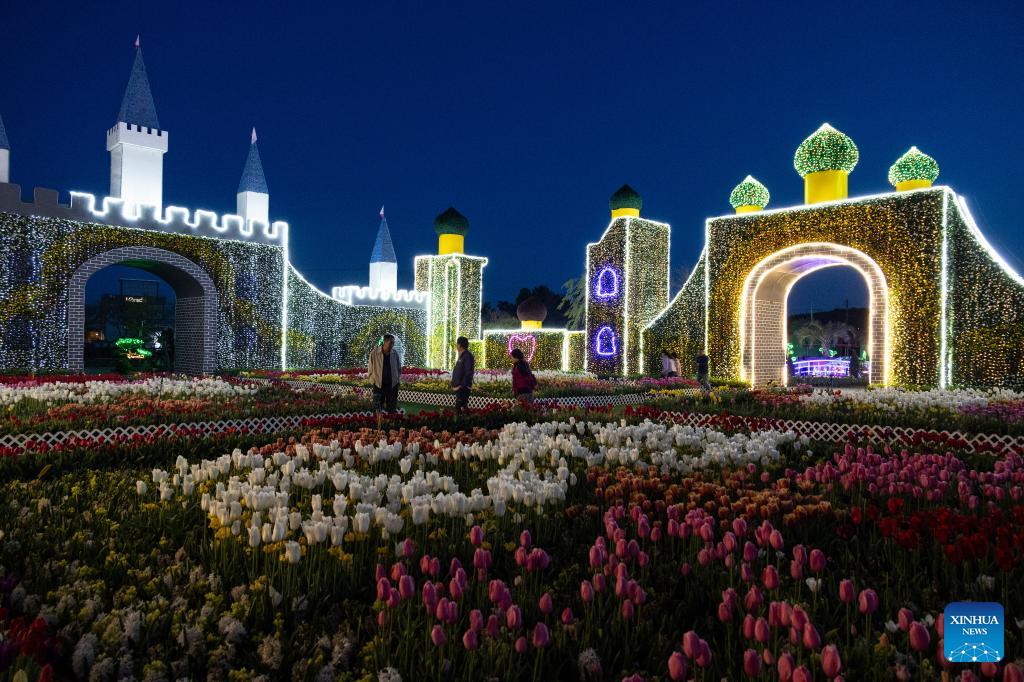
From a technical standpoint, the "maintenance overhead" for millions of tulips is substantial. The park must maintain a specific "soil moisture" level and a temperature-controlled environment where possible to prevent premature wilting. We are looking at a system that likely utilizes automated irrigation with a 95% water-use efficiency rate to sustain the vibrancy of the petals. Furthermore, the "foot traffic" management in the Paolo Sarpi area of the park is designed to handle thousands of visitors per hour, with a "flow rate" that ensures a high "visitor satisfaction score" while protecting the delicate root systems of the plants. The "return on aesthetics" (ROA) for the region is further amplified by social media—each photo shared acts as a "zero-cost" marketing unit, reaching a global audience and increasing the "brand value" of Taean as a premier destination for micromobility and eco-tourism.
To solve the challenge of maintaining long-term sustainability for such a resource-heavy event, the festival organizers must focus on "waste-to-value" cycles. Post-festival, the "lifecycle management" of over 2 million bulbs involves either cold-storage for the next season or composting to generate nutrient-rich organic matter, which can reduce the "fertilizer cost" for the following year by an estimated 10% to 15%. Additionally, by integrating "smart ticketing" with a 0.5-second latency for QR code entry, the park can reduce "queue-wait times" by 40%, directly improving the "operational efficiency" of the gates.
Ultimately, the Taean Tulip Festival demonstrates that the "correlation" between environmental beauty and regional economic growth is stronger than ever. In the 2026 landscape, where travelers seek "high-fidelity" outdoor experiences, the ability to deliver a perfect, 100% bloom rate is the ultimate competitive advantage. The festival serves as a critical "revenue engine" for South Korea's tourism sector, proving that with the right "technical parameters" and a commitment to "quality management," a simple park can transform into a high-performance economic hub.
News source:https://peoplesdaily.pdnews.cn/world/er/30051989811