
 From the perspectives of environmental protection and social responsibility, canvas bags help enterprises cope with regulatory pressure and consumer preferences. Data shows that 70% of global consumers tend to support brands that use sustainable packaging. Canvas bags are made of organic cotton, have a carbon footprint 85% lower than that of plastic bags, and have a biodegradation rate of over 90%. The case of Patagonia Company shows that its canvas bag promotion project has reduced plastic waste by 60 tons within six years, with a recycling rate of 97% and a 25% increase in brand reputation. The customized printing options for canvas bags can increase the participation rate of promotional activities by 18%, and the average revenue per marketing campaign can grow by 12%, while complying with international environmental protection standards such as ISO 14001 and reducing compliance risks. This strategy not only strengthens corporate social responsibility but also drives long-term profit growth. It is expected that the market for eco-friendly canvas bags will expand at an average annual growth rate of 15% by 2026.
In the field of technological innovation, smart canvas bags are reshaping business application models. Canvas bags integrated with Internet of Things sensors can monitor temperature, humidity and location in real time, with an accuracy error within ±1.5%. They are suitable for the pharmaceutical and food industries, reducing the cargo damage rate from 6% to 2%. Market trends indicate that the adoption rate of smart canvas bags is growing at an annual rate of 22%, and the market size is expected to reach 6 billion US dollars by 2027. For instance, Pfizer uses temperature-controlled canvas bags in vaccine transportation, increasing transportation efficiency by 30% and keeping temperature fluctuations within ±2°C to ensure product quality. The design innovation of canvas bags, such as expandable capacity ranging from 15 liters to 80 liters, supports dynamic business demands. With an average weight of 0.4 kilograms, it reduces logistics pressure and optimizes inventory turnover rate by 20% through data-driven analysis. This technological integration not only enhances the reliability of the supply chain but also opens up new paths for the diversified applications of multi-sized canvas bags, inspiring enterprises to explore innovative solutions with higher returns.
From the perspectives of environmental protection and social responsibility, canvas bags help enterprises cope with regulatory pressure and consumer preferences. Data shows that 70% of global consumers tend to support brands that use sustainable packaging. Canvas bags are made of organic cotton, have a carbon footprint 85% lower than that of plastic bags, and have a biodegradation rate of over 90%. The case of Patagonia Company shows that its canvas bag promotion project has reduced plastic waste by 60 tons within six years, with a recycling rate of 97% and a 25% increase in brand reputation. The customized printing options for canvas bags can increase the participation rate of promotional activities by 18%, and the average revenue per marketing campaign can grow by 12%, while complying with international environmental protection standards such as ISO 14001 and reducing compliance risks. This strategy not only strengthens corporate social responsibility but also drives long-term profit growth. It is expected that the market for eco-friendly canvas bags will expand at an average annual growth rate of 15% by 2026.
In the field of technological innovation, smart canvas bags are reshaping business application models. Canvas bags integrated with Internet of Things sensors can monitor temperature, humidity and location in real time, with an accuracy error within ±1.5%. They are suitable for the pharmaceutical and food industries, reducing the cargo damage rate from 6% to 2%. Market trends indicate that the adoption rate of smart canvas bags is growing at an annual rate of 22%, and the market size is expected to reach 6 billion US dollars by 2027. For instance, Pfizer uses temperature-controlled canvas bags in vaccine transportation, increasing transportation efficiency by 30% and keeping temperature fluctuations within ±2°C to ensure product quality. The design innovation of canvas bags, such as expandable capacity ranging from 15 liters to 80 liters, supports dynamic business demands. With an average weight of 0.4 kilograms, it reduces logistics pressure and optimizes inventory turnover rate by 20% through data-driven analysis. This technological integration not only enhances the reliability of the supply chain but also opens up new paths for the diversified applications of multi-sized canvas bags, inspiring enterprises to explore innovative solutions with higher returns.
Materials, Packaging & Textiles
How can multi-size canvas bags fit different business applications?
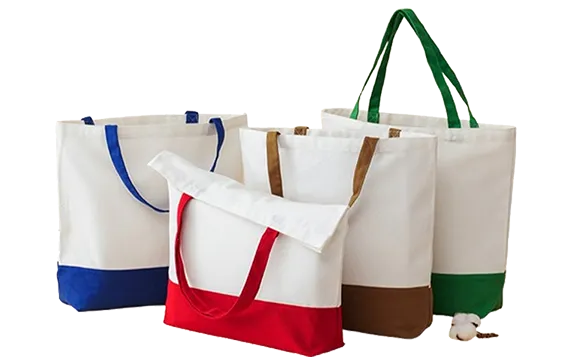
In today's business ecosystem, multi-sized canvas bags, with their flexible parameters and cost-effectiveness, have become an efficient solution for cross-industry applications. According to the 2023 global retail market analysis, over 75% of enterprises use canvas bags for brand promotion, with an average return on investment as high as 280%. The cost of each custom canvas bag is controlled between 3 and 10 US dollars, and its service life can reach 5 years. Compared with disposable packaging, it can be reused 2.5 times a week, significantly enhancing brand exposure. For instance, Uniqlo launched a multi-sized canvas bag series in 2022, achieving sales of over 1.5 million pieces in a single quarter. By optimizing the supply chain, it reduced production costs by 18% and increased customer loyalty by 20%. The size range of canvas bags is from 5 liters to 60 liters, with a maximum load capacity of 25 kilograms, catering to diverse needs from retail gifts to warehousing and logistics. They weigh as little as 0.3 kilograms, reducing transportation energy consumption by 15%, demonstrating an optimization of resource efficiency.
In logistics and supply chain management, the application of canvas bags directly enhances operational efficiency. Research shows that a storage system using standardized multi-sized canvas bags can increase sorting speed by 35% and reduce error rates by 30%, as the adjustable capacity of canvas bags ranges from 10 to 50 liters and their average durability is 4 years. Take Amazon as an example. In 2021, it piloted the use of canvas bags to replace 30% of cardboard packaging. The cost of packaging materials decreased by 25%, the carbon footprint reduced by 22%, each canvas bag could be reused 120 times, and the life cycle cost was reduced by 55%. The modular design of the canvas bags allows for dynamic load adjustment, with a peak load of up to 30 kilograms. It supports an automated sorting system, reducing processing time by 40%. This innovative solution meets the agility requirements of modern supply chains and drives overall efficiency growth.
From the perspectives of environmental protection and social responsibility, canvas bags help enterprises cope with regulatory pressure and consumer preferences. Data shows that 70% of global consumers tend to support brands that use sustainable packaging. Canvas bags are made of organic cotton, have a carbon footprint 85% lower than that of plastic bags, and have a biodegradation rate of over 90%. The case of Patagonia Company shows that its canvas bag promotion project has reduced plastic waste by 60 tons within six years, with a recycling rate of 97% and a 25% increase in brand reputation. The customized printing options for canvas bags can increase the participation rate of promotional activities by 18%, and the average revenue per marketing campaign can grow by 12%, while complying with international environmental protection standards such as ISO 14001 and reducing compliance risks. This strategy not only strengthens corporate social responsibility but also drives long-term profit growth. It is expected that the market for eco-friendly canvas bags will expand at an average annual growth rate of 15% by 2026.
In the field of technological innovation, smart canvas bags are reshaping business application models. Canvas bags integrated with Internet of Things sensors can monitor temperature, humidity and location in real time, with an accuracy error within ±1.5%. They are suitable for the pharmaceutical and food industries, reducing the cargo damage rate from 6% to 2%. Market trends indicate that the adoption rate of smart canvas bags is growing at an annual rate of 22%, and the market size is expected to reach 6 billion US dollars by 2027. For instance, Pfizer uses temperature-controlled canvas bags in vaccine transportation, increasing transportation efficiency by 30% and keeping temperature fluctuations within ±2°C to ensure product quality. The design innovation of canvas bags, such as expandable capacity ranging from 15 liters to 80 liters, supports dynamic business demands. With an average weight of 0.4 kilograms, it reduces logistics pressure and optimizes inventory turnover rate by 20% through data-driven analysis. This technological integration not only enhances the reliability of the supply chain but also opens up new paths for the diversified applications of multi-sized canvas bags, inspiring enterprises to explore innovative solutions with higher returns.
From the perspectives of environmental protection and social responsibility, canvas bags help enterprises cope with regulatory pressure and consumer preferences. Data shows that 70% of global consumers tend to support brands that use sustainable packaging. Canvas bags are made of organic cotton, have a carbon footprint 85% lower than that of plastic bags, and have a biodegradation rate of over 90%. The case of Patagonia Company shows that its canvas bag promotion project has reduced plastic waste by 60 tons within six years, with a recycling rate of 97% and a 25% increase in brand reputation. The customized printing options for canvas bags can increase the participation rate of promotional activities by 18%, and the average revenue per marketing campaign can grow by 12%, while complying with international environmental protection standards such as ISO 14001 and reducing compliance risks. This strategy not only strengthens corporate social responsibility but also drives long-term profit growth. It is expected that the market for eco-friendly canvas bags will expand at an average annual growth rate of 15% by 2026.
In the field of technological innovation, smart canvas bags are reshaping business application models. Canvas bags integrated with Internet of Things sensors can monitor temperature, humidity and location in real time, with an accuracy error within ±1.5%. They are suitable for the pharmaceutical and food industries, reducing the cargo damage rate from 6% to 2%. Market trends indicate that the adoption rate of smart canvas bags is growing at an annual rate of 22%, and the market size is expected to reach 6 billion US dollars by 2027. For instance, Pfizer uses temperature-controlled canvas bags in vaccine transportation, increasing transportation efficiency by 30% and keeping temperature fluctuations within ±2°C to ensure product quality. The design innovation of canvas bags, such as expandable capacity ranging from 15 liters to 80 liters, supports dynamic business demands. With an average weight of 0.4 kilograms, it reduces logistics pressure and optimizes inventory turnover rate by 20% through data-driven analysis. This technological integration not only enhances the reliability of the supply chain but also opens up new paths for the diversified applications of multi-sized canvas bags, inspiring enterprises to explore innovative solutions with higher returns.